¿Por qué el mecanizado CNC ofrece a los luthiers una ventaja competitiva?
La construcción tradicional de guitarras requiere cientos de horas por instrumento. Un solo mástil de guitarra acústica, tallado y moldeado a mano, puede llevar 3 días completos. Con una Enrutador de madera CNCEse mismo mástil se mecaniza en menos de 4 horas, incluyendo la preparación. Esta ventaja de velocidad se acumula en las producciones por lotes, lo que permite a los pequeños talleres cumplir con los pedidos personalizados y producir inventario simultáneamente.
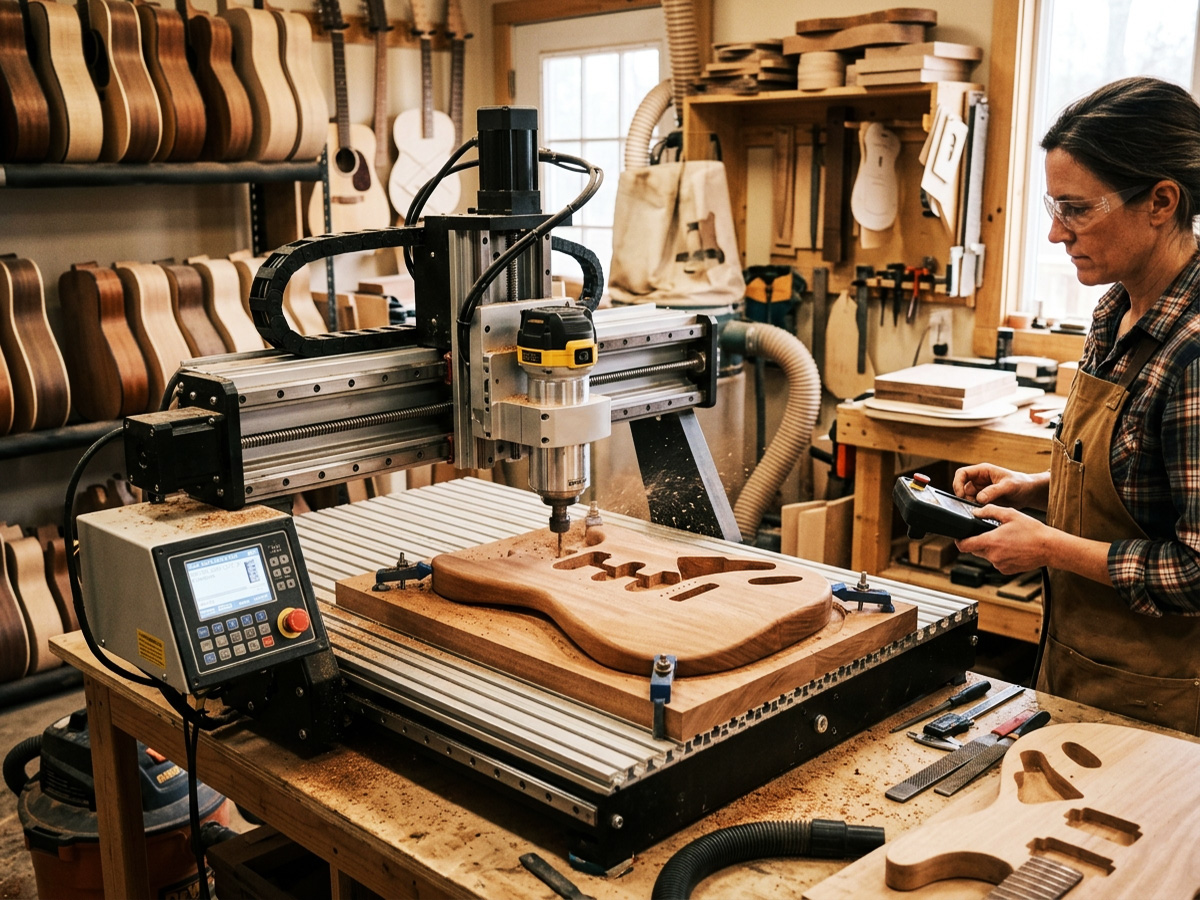
El tallado CNC también elimina la inconsistencia que afecta a los instrumentos hechos a mano. Cada cavidad, radio y contorno se replica a partir de archivos CAD verificados, por lo que la décima guitarra que sale de la línea de producción suena y se toca de forma idéntica a la primera.
| Measurement | Hecho a mano | Fresado CNC |
|---|---|---|
| Tiempo de moldear el cuerpo | 6-8 horas | 45 – 90 minutos |
| Tiempo de tallado del cuello | 2 – 3 días | 3-4 horas |
| Tolerancia Dimensional | ±0.5 mm típico | Se puede alcanzar ±0.05 mm |
| Tasa de desperdicio de material | 15-25% | 5-10% |
| Consistencia de lote | Variable | Idéntico por archivo CAD |
Creciente demanda de piezas de guitarra fabricadas mediante CNC.
El mercado mundial de guitarras estaba valorado en aproximadamente 12.7 millones de dólares en 2025 y se prevé que crezca a una tasa de crecimiento anual compuesta de aproximadamente el 7.5% durante los primeros años. 2030Los instrumentos personalizados y de alta gama representan uno de los segmentos de más rápido crecimiento, con volúmenes de pedidos en los talleres de fabricación a medida que alcanzan niveles sin precedentes.
Los mercados en línea como Reverb, Etsy y eBay han facilitado enormemente que los pequeños fabricantes lleguen a compradores globales. Solo las ventas de guitarras usadas y de boutique representan un mercado anual multimillonario que crece a un ritmo superior a... 5% por año.
• Aproximadamente entre el 45% y el 49% de los nuevos guitarristas desde 2020 son mujeres, lo que amplía drásticamente la base de compradores.
• Guitarras de nivel básico por debajo de $200 cuenta para aproximadamente 60% de ventas unitarias que generan una enorme demanda de componentes asequibles y bien fabricados.
• Las ventas de guitarras en línea ahora representan el 38%40% de todas las compras de guitarras en EE. UU.
• La demanda de personalización se ha disparado, y los compradores buscan formas de carrocería, incrustaciones y acabados personalizados.
¿Qué puedes fabricar y vender? ¿Catálogo de productos con precios?
Un negocio de fabricación de guitarras mediante CNC no se limita a instrumentos completos. La venta de componentes, accesorios y productos complementarios genera múltiples fuentes de ingresos. A continuación, encontrará un catálogo de productos con precios aproximados por unidad para artículos fabricados mediante CNC.
| Producto | Material | Rango de Precio: | Canal de ventas |
|---|---|---|---|
| Cuerpo de guitarra eléctrica (sin pintar) | Aliso, fresno, tilo | $ 60-$ 150 | Reverb, eBay, pedidos directos |
| Kit de cuerpo de guitarra acústica | Abeto, caoba | $ 120-$ 300 | Minoristas de suministros para luthiers |
| Mástil de guitarra (arce/palisandro) | Arce, caoba | $ 50-$ 180 | Reverb, Etsy, venta al por mayor |
| Diapasón / diapasón | Ébano, palo de rosa, arce | $ 20-$ 60 | Suministro directo para luthiers |
| Revestimiento/chapa del clavijero | Ébano, maderas exóticas | $ 8-$ 25 | Etsy, foros de luthier |
| Incrustaciones personalizadas (diapasón/roseta) | Nácar, abulón, acrílico | $ 15-$ 80 | Directo, Reverb, Etsy |
| Golpeadores | Acrílico, madera, celuloide | $ 10-$ 40 | Amazon, Reverb, directo |
| Púas de guitarra (con marca personalizada) | Acrílico, madera, cuerno | $2–$8 cada uno | Etsy, productos de bandas, venta al por mayor |
| Soportes para guitarra / colgadores de pared | Madera dura, madera contrachapada | $ 25-$ 75 | Amazon, Etsy, tiendas de música |
| Insertos personalizados para estuches de guitarra | Carcasa de espuma y madera contrachapada | $ 40-$ 120 | Directo, Reverberación |
| Plantillas y guías para constructores | MDF, acrílico | $ 15-$ 50 | Foros de luthier, Etsy |
Cómo elegir la fresadora CNC adecuada para la construcción de guitarras
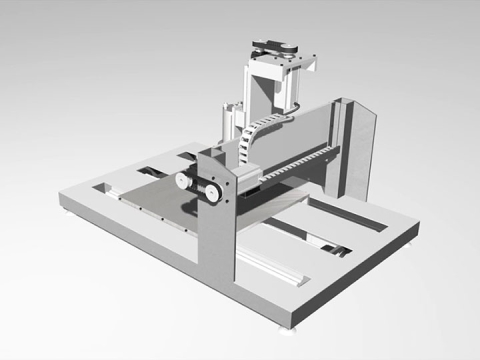
La elección de la máquina adecuada depende de su volumen de producción, espacio de trabajo y presupuesto. Un router compacto de 600 × 900 mm maneja bien los cuerpos y mástiles de guitarras individuales, mientras que un router de tamaño completo... 4x8 Enrutador de madera CNC Permite anidar varias piezas en una sola hoja, maximizando así el rendimiento en la producción por lotes.
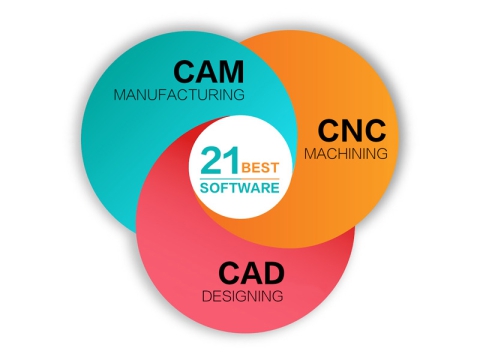
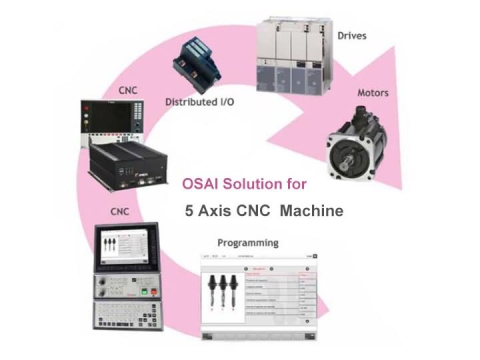
Para los talleres que cortan varios perfiles (cavidades del cuerpo, bolsillos del mástil, bolsillos para incrustaciones), un Fresadora CNC ATC con cambiador automático de herramientas Elimina el cambio manual de brocas y ahorra mucho tiempo en operaciones múltiples. Un husillo de 2.2 a 3.0 kW proporciona la potencia adecuada para maderas duras como el arce y la caoba. Para operaciones comerciales de mayor envergadura, un husillo de 4.5 kW o superior, junto con un sistema de sujeción por vacío, ofrece un rendimiento de nivel industrial.
Configuraciones de máquina recomendadas
| SCALE | Área de trabajo | Huso | Uso recomendado |
|---|---|---|---|
| Afición / Emprendimiento | 600 × 900 mm | 1.5–2.2 kilovatios | Producción de cuerpos/cuellos individuales, creación de prototipos |
| Pequeño Taller | 1300 × 2500 mm | 3.0–4.5 kilovatios | Cuerpos de lote, corte anidado, fabricación de plantillas |
| Taller de producción | 1500 × 3000 mm+ | 4.5–9.0 kW + ATC | Fabricación de alto volumen, anidamiento de múltiples piezas |
Recomendaciones de materiales para piezas de guitarra mecanizadas por CNC
La selección de la madera influye directamente en la calidad del sonido, la facilidad de manipulación y el valor de venta. A continuación, se muestran los materiales más comunes utilizados en la fabricación de guitarras mediante CNC, junto con sus aplicaciones típicas.
• Aliso / Tilo: Ligero, fácil de mecanizar, excelente para cuerpos de guitarras eléctricas. Preferido por los constructores de guitarras estilo Fender.
• Fresno (fresno de pantano): veta abierta, tono brillante. Popular para la construcción de guitarras estilo Telecaster y Stratocaster.
• Caoba: Tono cálido y rico con excelente sustain. Estándar para cuerpos estilo Les Paul y fondos/laterales de guitarras acústicas.
• Arce: Denso y brillante. Se utiliza para mástiles, diapasones y tapas de cuerpo. Requiere herramientas afiladas y velocidades de avance más lentas en la máquina CNC.
• Abeto: La madera predilecta para la tapa armónica de las guitarras acústicas. Ligera, rígida y resonante.
• Ébano / Palo de rosa: Maderas de diapasón de primera calidad. Densas y ricas en aceite, utilice herramientas de carburo y velocidades de husillo más bajas.
Añadiendo valor con grabado láser e incrustaciones.
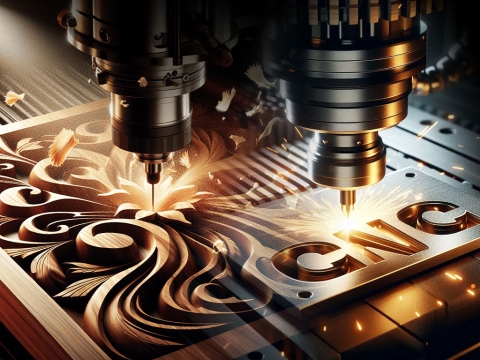
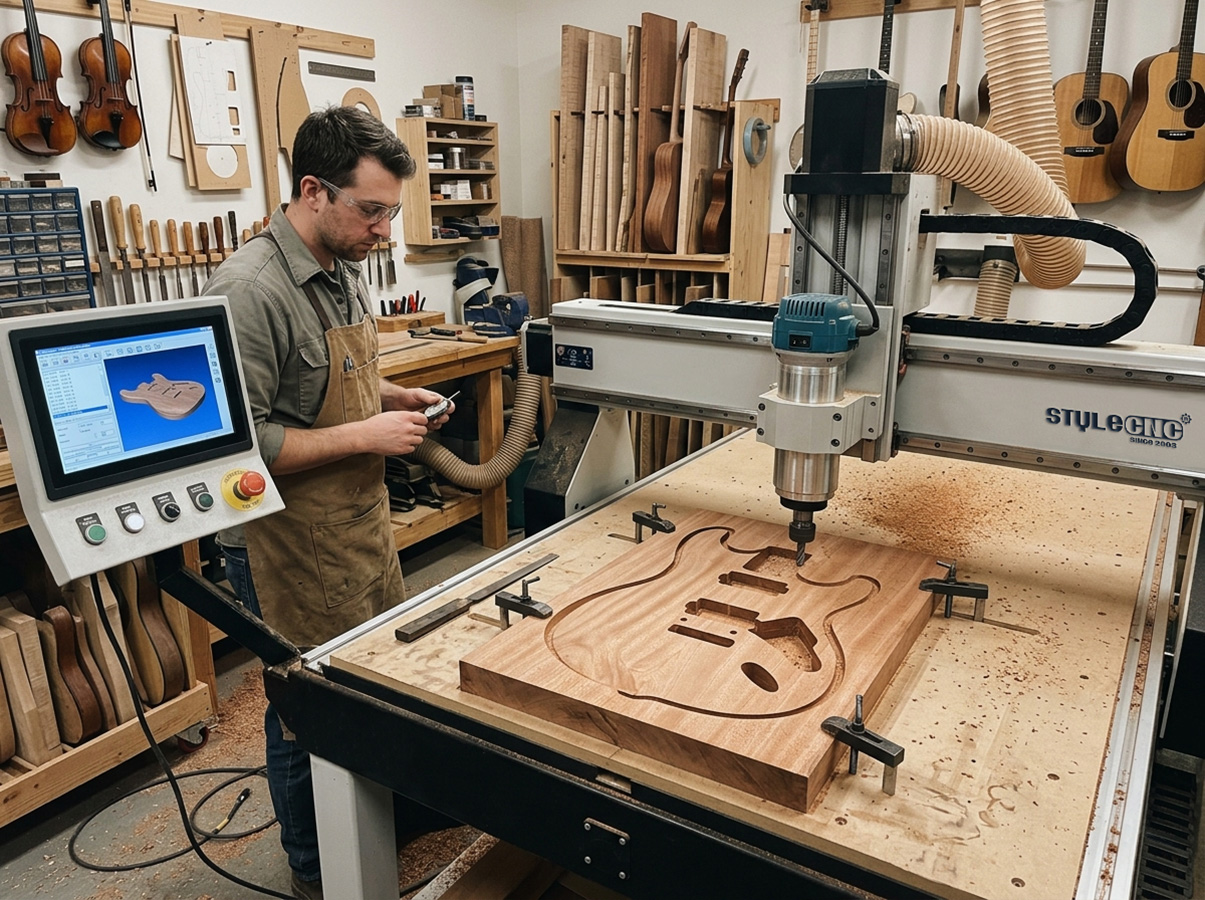
Las incrustaciones del diapasón, las rosetas y los logotipos del clavijero son añadidos de alto valor que distinguen a las guitarras personalizadas de los instrumentos producidos en masa. Una fresadora CNC se encarga del corte de cavidades para incrustaciones de concha y acrílico, mientras que una máquina de grabado láser Añade intrincados grabados decorativos, números de serie y logotipos de marca directamente sobre superficies de madera, hueso o acrílico.
Combinando un Enrutador CNC Con un expansor láser, su taller tiene la capacidad de ofrecer instrumentos totalmente personalizados a precios premium. Muchos negocios de lutería exitosos informan que solo los servicios de incrustaciones y grabados personalizados generan 20–30% de los ingresos totales.
Retorno de la inversión empresarial: Desglose de la inversión frente al retorno
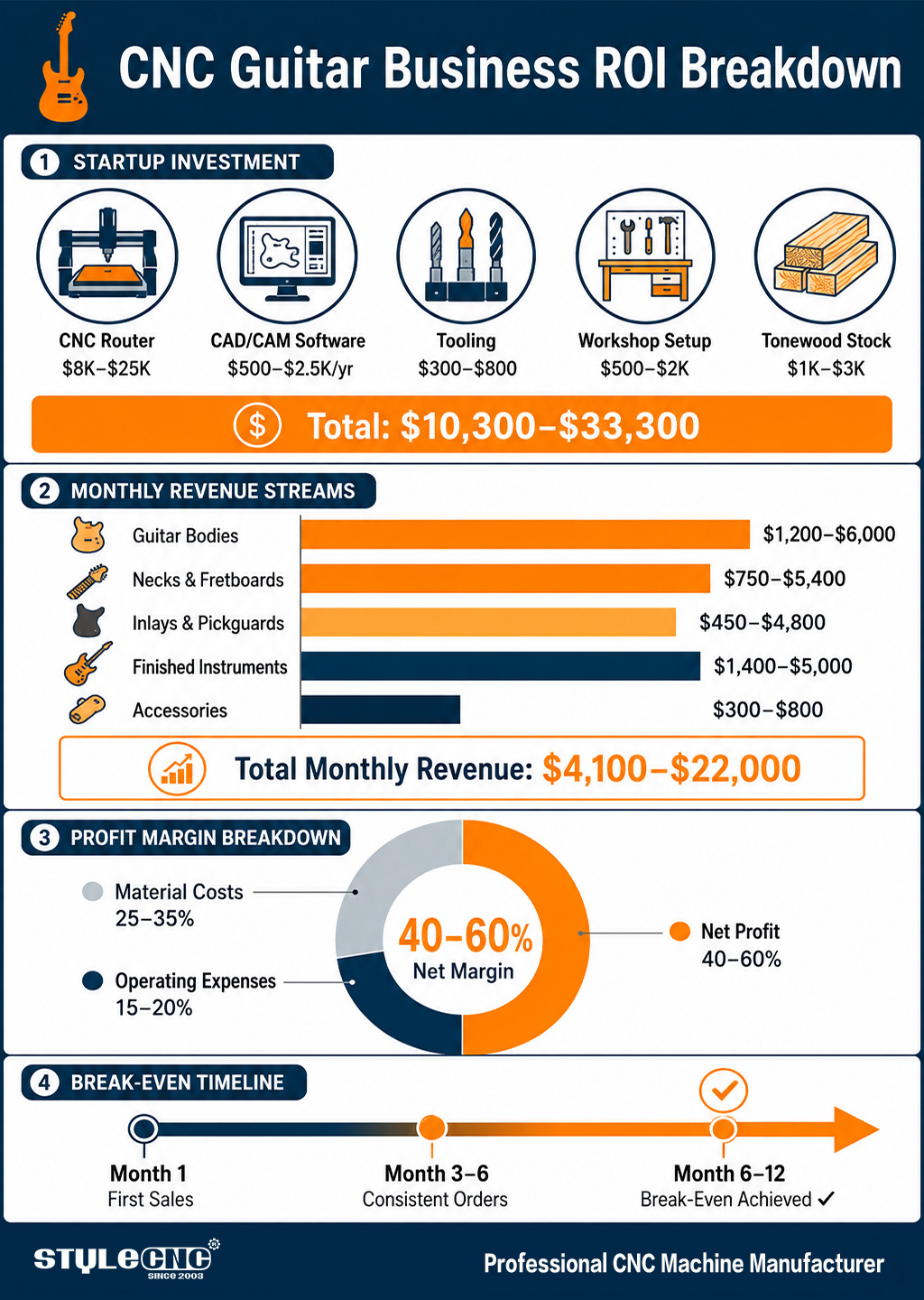
Es fundamental comprender la situación financiera antes del lanzamiento. A continuación, presentamos una proyección realista del retorno de la inversión (ROI) basada en un pequeño taller que produce componentes de guitarra mecanizados por CNC e instrumentos terminados.
| Artículo de inversión | Costo Estimado |
|---|---|
| Fresadora CNC (3 ejes, cambiador automático de herramientas, 1300 × 2500 mm) | $ 8,000-$ 25,000 |
| Software CAD/CAM (Fusion 360, VCarve, etc.) | $500–$2,500/año |
| Herramientas (fresas de extremo, fresas de punta esférica, brocas en V) | $ 300-$ 800 |
| Recogida de polvo y configuración del taller | $ 500-$ 2,000 |
| existencias iniciales de madera para instrumentos musicales | $ 1,000-$ 3,000 |
| Inversión total en startups | $ 10,300-$ 33,300 |
Proyección de ingresos mensuales (Taller pequeño)
| Flujo de ingresos | Unidades/mes | ganancia mensual |
|---|---|---|
| Cuerpos de guitarra (eléctrica) | 20-40 | $ 1,200-$ 6,000 |
| Mástiles y diapasones | 15-30 | $ 750-$ 5,400 |
| Incrustaciones y golpeadores personalizados | 30-60 | $ 450-$ 4,800 |
| Instrumentos terminados | 2-5 | $ 1,400-$ 5,000 |
| Accesorios (púas, soportes, plantillas) | 50–100 + | $ 300-$ 800 |
| Ingresos mensuales totales estimados | - | $ 4,100-$ 22,000 |
Con costos de materiales que promedian entre el 25 y el 35 % de los ingresos y gastos operativos alrededor del 15 %.20%, márgenes de beneficio neto del 40%60% Estos objetivos son alcanzables para empresas de fabricación de guitarras mediante CNC bien gestionadas. La mayoría de los talleres alcanzan el punto de equilibrio en un plazo de 6 a 12 meses de producción constante.
Cómo llegar a tus compradores
La venta de piezas e instrumentos de guitarra fabricados mediante CNC requiere un enfoque multicanal. A continuación, se presentan las estrategias más efectivas que utilizan los fabricantes para encontrar y fidelizar clientes.
✓ Reverb.com: el mayor mercado especializado en instrumentos y piezas musicales. Tarifas de publicación bajas, confianza garantizada por el comprador y un excelente posicionamiento SEO para piezas de guitarra.
✓ Etsy: ideal para incrustaciones personalizadas, púas de marca, superposiciones únicas para el clavijero y accesorios artesanales.
✓ eBay / Amazon: Gran volumen de ventas de cuerpos, mástiles y kits de herrajes estandarizados.
✓ Sitio web directo con Shopify: desarrolla tu marca, muestra tus creaciones personalizadas y obtén mayores márgenes vendiendo directamente al consumidor.
✓ Minoristas y distribuidores de música: acuerdos de colaboración mayorista para tiendas y cadenas.
✓ Comunidades de proveedores para luthiers: foros como LMI, la comunidad StewMac y los grupos en redes sociales te conectan con constructores profesionales que necesitan proveedores de componentes fiables.
Errores Comunes que se deben Evitar
Iniciar un negocio de guitarras CNC requiere un periodo de aprendizaje. Estos son los obstáculos que suelen encontrar la mayoría de los nuevos constructores:
• Evitar la creación de prototipos: Siempre realice cortes de prueba en madera de álamo o MDF económicas antes de mecanizar maderas de alta calidad para instrumentos musicales.
• Velocidades de avance incorrectas para maderas duras: Las maderas densas como el arce y el ébano requieren velocidades de avance más lentas y herramientas de carburo afiladas para evitar el astillado.
• Ignorar la recolección de polvo: El polvo fino de madera para instrumentos musicales daña los cojinetes y rieles del husillo. Invierta en un sistema de extracción adecuado desde el primer día.
• Ausencia de control de calidad: Mida cada lote con un calibrador. Incluso una desviación de 0.2 mm en el alojamiento del mástil afecta la facilidad de ejecución.
• No subestime el valor de su trabajo: tenga en cuenta el tiempo de máquina, el material, el acabado, el envío y las comisiones de la plataforma antes de fijar los precios.
• Dependencia excesiva del CNC: El lijado final, el trabajo de calado, el acabado y el ajuste siguen siendo procesos manuales. El CNC se encarga del desbaste y la conformación de precisión, no de la construcción completa.
Primeros pasos: Lista de verificación paso a paso
Sigue esta secuencia para pasar de la idea a la primera venta lo más rápido posible.
1. Investiga tu nicho de mercado: cuerpos eléctricos, kits acústicos, accesorios o los tres.
2. Seleccione y pida su fresadora CNC. Explore las opciones disponibles. STYLECNC Catálogo de fresadoras CNC para carpintería para que se ajuste a su presupuesto y objetivos de producción.
3. Instale el software CAD/CAM (Fusion 360, VCarve Pro o Aspire) y aprenda las trayectorias de herramienta específicas para guitarra.
4. Adquiera maderas de calidad para instrumentos musicales de proveedores de buena reputación (Gilmer Wood, Cook Woods o aserraderos locales para madera recuperada).
5. Crea prototipos de tus primeros diseños en MDF o álamo antes de optar por materiales de primera calidad.
6. Crea cuentas de vendedor en Reverb, Etsy y tu propia tienda Shopify.
7. Fotografie y enumere sus productos con especificaciones detalladas, tipo de madera y afirmaciones sobre la precisión del mecanizado CNC.
8. Crea una presencia en redes sociales (Instagram, YouTube, TikTok) mostrando vídeos de tu proceso de fabricación CNC, que generan una gran cantidad de conversiones.
Vídeo: Fresadora CNC fabricando el cuerpo de una guitarra
Ver un STYLECNC Fresadora en acción, dando forma al cuerpo de una guitarra a partir de un bloque de madera en bruto. Vea la demostración completa en vídeo: Cuerpo de guitarra DIY fabricado con fresadora CNC.
Preguntas frecuentes
¿Qué tamaño de fresadora CNC necesito para fabricar guitarras?
Un área de trabajo mínima de 600 × 900 mm permite manipular cuerpos y cuellos individuales. Para la producción en serie y el anidamiento de láminas, se recomienda una mesa de 1300 × 2500 mm o mayor.
¿Cuánto cuesta iniciar un negocio de fabricación de guitarras mediante CNC?
Las configuraciones de nivel básico comienzan alrededor de $10,000 y 15,000 dólares, incluyendo el router, el software, las herramientas y los materiales iniciales. Los talleres de nivel de producción suelen requerir $20,000–$35,000.
¿Puedo usar la tecnología CNC para guitarras acústicas, no solo eléctricas?
Sí. Las fresadoras CNC mecanizan los refuerzos, los bloques del mástil, las rosetas, las placas del puente y los moldes del cuerpo de las guitarras acústicas. Muchos luthiers de guitarras acústicas utilizan CNC para todos los componentes estructurales y reservan el trabajo manual para el ajuste de la sonoridad y el ensamblaje final.
¿Qué software CAD/CAM funciona mejor para la construcción de guitarras?
Fusion 360, VCarve Pro y Aspire son los más populares entre los constructores de guitarras. Las opciones gratuitas como FreeCAD funcionan para perfiles 2D básicos, pero 3D El tallado del cuello generalmente requiere Fusion 360 o MeshCAM.
¿Es rentable la fabricación de guitarras mediante CNC como actividad secundaria?
Absolutamente. Vender solo 10-20 cuerpos y mástiles de guitarra al mes en Reverb o Etsy puede generar $1,500–$4,000 en ingresos con 40–60% márgenes que lo convierten en una fuente de ingresos secundaria viable junto con un trabajo a tiempo completo.
¿La tecnología CNC sustituye la artesanía manual en la fabricación de guitarras?
No. La tecnología CNC se encarga del modelado de precisión, el fresado de cavidades y las tareas repetitivas. El lijado final, el calado, el acabado, el ajuste y la inspección de calidad siguen siendo habilidades manuales esenciales que definen la reputación de un fabricante.