Definición
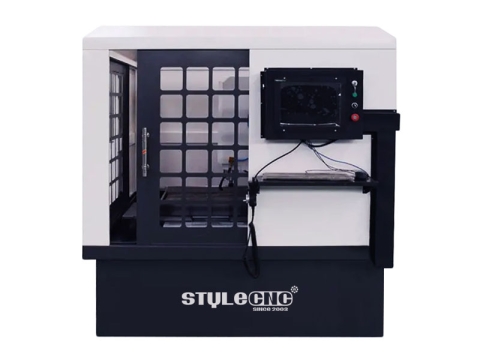
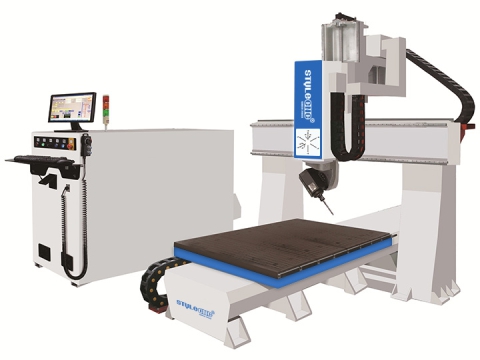
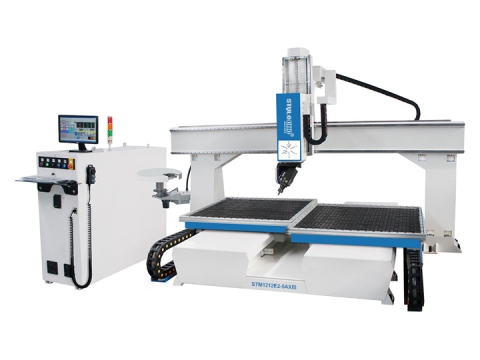
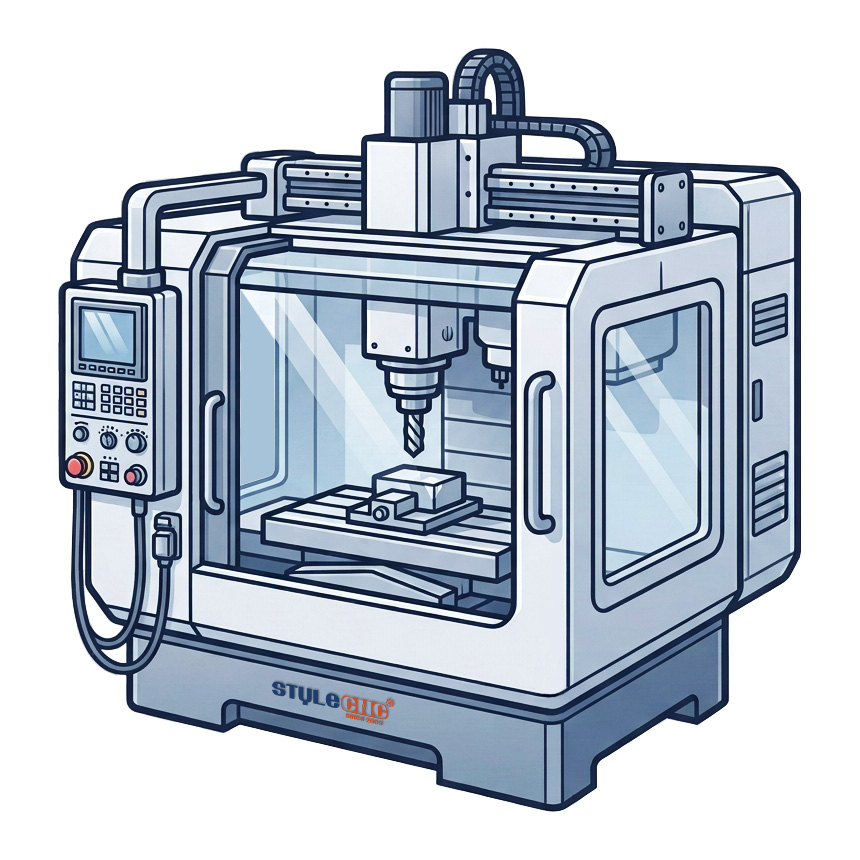
Una fresadora CNC es una fresadora automática con controlador CNC (control numérico por computadora) para cortar 2D/3D El fresado CNC es un método de mecanizado controlado numéricamente por ordenador similar al grabado, corte, taladrado y perforación, capaz de lograr muchas de las operaciones realizadas por las fresadoras y mandrinadoras CNC. Una fresadora controlada por ordenador utiliza una herramienta cilíndrica giratoria, que puede moverse a lo largo de varios ejes y puede crear una variedad de formas, ranuras y agujeros. Además, la pieza de trabajo a menudo se mueve a través de la herramienta de fresado en diferentes direcciones.
Una fresadora CNC es un conjunto de herramientas de mecanizado de alta precisión que funciona con un controlador numérico de computadora para impulsar una fresadora a fin de que se desplace a lo largo de la trayectoria de la herramienta para cortar formas o contornos diseñados mediante CAD/CAM, que se actualiza sobre la base de una fresadora portátil. Una fresadora CNC puede realizar perforaciones, taladrados, roscados, 2D/3D Fresado. Las fresadoras más populares incluyen la fresadora vertical y la fresadora horizontal, que pueden completar la conexión de 3 ejes, 4 ejes o 5 ejes para cortar y fresar aluminio, latón, cobre, hierro y acero con un motor de husillo de alta potencia y un servomotor para garantizar que el husillo funcione a alta velocidad para mejorar la precisión, la exactitud y la tolerancia del mecanizado de las piezas metálicas. Una fresadora controlada por computadora se utiliza para piezas de aviación, piezas de automóviles, fabricación de moldes, piezas de maquinaria, piezas de trenes y piezas de construcción naval. Una fresadora automática controlada por computadora con cambiador de herramientas también se conoce como centro de mecanizado CNC.
Principio
CNC (Computer Numerical Control) milling machines are typically classified by the number of axes they operate on, with each axis designated by a specific letter. The X and Y axes represent horizontal movement (forward/backward and left/right across a plane), the Z axis represents vertical (up/down) movement, and the W axis represents diagonal movement within a vertical plane. Most milling machines—ranging from large industrial units to compact (mini) models—feature between 3 and 5 axes, enabling machining along the X, Y, and Z axes at a minimum. High-end automated milling machines (such as 5-axis CNC models) are capable of machining highly complex geometries, requiring computer numerical control programming to achieve optimal performance. Such equipment is invaluable, as it allows for the creation of complex shapes that would be nearly impossible to produce using traditional manual tools. Additionally, computer-controlled milling machines feature integrated coolant systems that deliver fluid to the cutting tool during the machining process.
CNC mills are widely used to manufacture a variety of components, and the associated costs have become increasingly affordable. While CNC machining meets a broad range of manufacturing needs, other methods are often more suitable for mass-production tasks involving relatively simple designs. CNC mills offer an ideal solution for a wide array of tasks, ranging from prototyping and small-batch production of complex parts to the manufacture of unique, precision components.
In principle, any material that can be cut or carved can be processed on an automated milling machine, although metalworking is the most common application. As with engraving and cutting processes, selecting the appropriate milling cutter for the specific material is essential to avoid issues. Factors such as material hardness and the rotational speed of the cutter must be carefully considered before machining begins.
Tipos
Las fresadoras CNC se dividen en fresadoras verticales y horizontales, según el eje del husillo. Estas máquinas también se clasifican en fresadoras de cabezal, fresadoras de rodilla, fresadoras de cepillado y fresadoras de bancada o de fabricación. La mayoría de las fresadoras automatizadas tienen un controlador numérico computarizado completo, husillos variables, motores de accionamiento eléctrico, sistemas de refrigeración y alimentadores de mesa accionados eléctricamente. Las fresadoras CNC se dividen en fresadoras verticales, fresadoras horizontales, fresadoras de torreta, fresadoras de bancada y fresadoras multieje (3 ejes, 4 ejes, 5 ejes).
Aplicaciones
CNC mills are typically used for milling, cutting, and drilling a wide range of materials, including metals such as copper, aluminum, steel, iron, and brass, as well as non-metallic materials like wood, foam, and plastic. This equipment finds extensive application in sectors such as injection molds, hardware molds, shoe molds, epoxy dispensing molds, watch components, zinc/copper electrodes, automotive manufacturing, metal crafts, jade carving, jewelry making, dental crown fabrication, and other molding and manufacturing fields. Specifically designed for the batch milling of molds, watches, eyewear, panels, signage, and badges—as well as for surface finishing and the engraving of 3D graphics and text—the machine can easily produce 2D/3D relief effects across various materials.
Precios
In terms of pricing, hobbyist-grade CNC milling machines start at just $3,600 (for 3-axis models), while industrial-grade 5-axis machines can cost up to $80,000. We have listed various models along with their table sizes, axis counts, types, and current list prices; for some models, an optional Automatic Tool Changer (ATC) is available for an additional $3,000. Additionally, if you are looking for the best value-for-money CNC mill, we can provide recommendations.
Costs vary depending on the machine's capabilities. Differences in service and support offered by various manufacturers and brands also influence the final price.
Machines manufactured in different countries incur varying tariffs, tax rates, and shipping costs, all of which determine the final selling price.
If you are interested in purchasing from overseas and would like to know the final cost, please contact us for a free quote, and we will calculate the total price for the milling machine you require.
Especificaciones
| Marcas | STYLECNC |
| Control | Estudio NC, SYNTEC |
| Tipos | Horizontal y vertical |
| Software | Tipo 3, UcanCAM, ArtCAM |
| Destornillador | Servomotor Yaskawa, motor paso a paso |
| Capacidad | Fresado 2D, 3D Fresado |
| Velocidad de fresado | 6000mm/ Min |
| Precisión de fresado | 0.1μm |
| Rango de Precio: | $3,000.00 - $120,000.00 |
Características y ventajas
Las fresadoras CNC se caracterizan por su alta precisión, facilidad de uso, alta rentabilidad, calidad de mecanizado estable y confiable, que puede fresar piezas complejas y 3D Piezas curvas. Puede realizar perforaciones, escariados, mandrilados, roscados, fresados y ranurados para piezas de caja.
Alta Confiabilidad
A medida que aumenta la densidad de integración de la línea resumen, se reduce la conexión dura de los componentes del control numérico y el dispositivo de accionamiento, y los puntos de soldadura, los puntos de conexión y el exterior se reducen continuamente, reduciendo así en gran medida la tasa de fallas.
Alta flexibilidad
Dado que el hardware del sistema de control numérico por computadora es universal y estandarizado, para los requisitos de control de diferentes máquinas, solo es necesario cambiar el programa de control del sistema en la memoria programable de solo lectura. Al mismo tiempo, debido a la estructura modular, también es conveniente para ampliar las funciones del sistema.
Alta adaptabilidad
La parte adaptativa, llamada flexibilidad, es la adaptabilidad de la máquina controlada exponencialmente para cambiar con el objeto de producción. El procesamiento del producto se lleva a cabo en equipos controlados por computadora. Cuando el producto cambia, sólo se puede cambiar el programa del molino de insumos para satisfacer las necesidades de producción del nuevo producto. No es necesario cambiar el hardware de la parte mecánica ni de la parte de control, y el proceso de producción se completa automáticamente. Esta característica no solo satisface las necesidades de la competencia del mercado de actualizaciones rápidas de productos, sino que también resuelve el problema de la producción automatizada de productos variables, de lotes pequeños y de una sola pieza. La gran adaptabilidad es la ventaja más destacada de los equipos controlados por computadora y también es la razón principal del surgimiento y el rápido desarrollo de los equipos controlados por computadora.
Mecatrónica
Después del uso de VLSI, se reduce el tamaño de la caja del gabinete, se utiliza la interfaz programable y los circuitos lógicos de S, M, T (control de transferencia del husillo, función auxiliar y parámetros de herramienta) y otras partes de control secuencial se combinan con el dispositivo NC. Por tanto, todas las cajas de control se introducen en la máquina, lo que reduce el espacio y facilita la gestión del equipo.
Cosas para considerar
Consideraciones básicas
⚙️ When operating the automatic milling machine, wear appropriate workwear with cuffs fastened and shirt tails tucked into trousers. Female trainees must wear safety helmets and tuck long hair (or braids) inside the helmet. Wearing sandals, slippers, high heels, tank tops, skirts, or scarves in the workshop is strictly prohibited;
⚙️ Do not move or damage any warning signs installed on the machine tool;
⚙️ Do not place obstacles around the automatic milling machine; ensure there is ample workspace;
⚙️ Coordinate effectively when working in teams of 2 or more;
⚙️ The use of compressed air to clean the milling machine, electrical cabinets, or CNC units is strictly prohibited;
⚙️ Practical operations must be performed on the designated machine tools and computers. Do not move other machine tools, tools, or electrical switches without authorization.
Preparativos
✔ Before operation, you must familiarize yourself with the automatic milling machine's overall performance, structure, drive mechanism, and control programs, as well as the functions of all control buttons and indicator lights and the relevant operating procedures. Do not operate or adjust the equipment until you fully understand the entire operating process.
✔ Before powering on, check that the electrical control system is functioning correctly; ensure the lubrication system is unobstructed and the oil is in good condition (adding sufficient lubricant as specified); verify the positions of operating handles; ensure the workpiece, fixture, and cutting tool are securely clamped; and check that coolant levels are adequate. Subsequently, run the machine at low speed without a load for 3 to 5 minutes to verify the proper functioning of drive components; proceed to normal operation only after confirming there are no faults.
✔ Once program debugging is complete, you must obtain approval from the instructor before proceeding with the operation steps; skipping steps is strictly prohibited. Unauthorized or non-compliant operation will result in a grade of zero; any accidents caused by such actions will lead to penalties and liability for damages in accordance with relevant regulations.
✔ Before machining parts, strictly verify the machine's home position and tool data, and perform a simulation run without the actual cutting path.
Precauciones
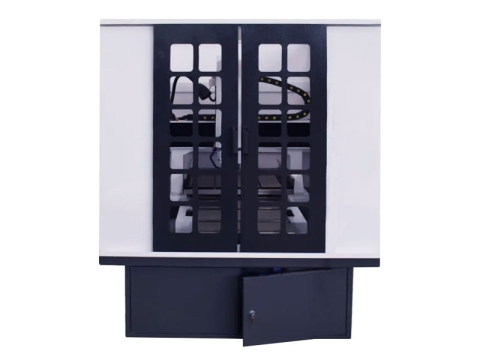
⚠️ The safety door must be closed during machining; strictly prohibit extending your head or hands into the enclosure, and do not open the safety door while machining is in progress.
⚠️ Operators must not leave the machine unattended during milling; maintain a high level of concentration and monitor the machine's operating status. In the event of any anomaly or accident, immediately stop program execution, cut off the power supply, and report the issue to the instructor; do not attempt any other actions;
⚠️ Strictly prohibit slapping the control panel or forcefully touching the display screen; strictly prohibit striking the machine table, indexing head, fixtures, or guideways;
⚠️ Strictly prohibit unauthorized opening of the CNC control cabinet for inspection or contact with internal components;
⚠️ Operators must not alter internal machine parameters at will; trainees must not load or modify programs not written by themselves;
⚠️ Do not perform any operations on the machine control computer other than running, transferring, or copying programs;
⚠️ The automated milling machine is a high-precision device; aside from the tooling and workpiece on the table, do not stack tools, fixtures, inserts, measuring instruments, workpieces, or other debris on the machine;
⚠️ Do not touch the tool tip or metal chips with bare hands; use a metal hook or brush to clear away chips;
⚠️ Do not touch the rotating spindle, workpiece, or other moving parts with hands or any other object;
⚠️ Do not measure the workpiece, manually change speeds, or wipe/clean the machine with cotton waste while machining is in progress;
⚠️ Do not perform unauthorized test runs of the machine;
⚠️ When moving axes using the handwheel or rapid traverse, verify the directional markings for the X, Y, and Z axes beforehand; when moving, turn the handwheel slowly at 1st to observe the direction of movement, and only increase speed after confirming the direction is correct;
⚠️ If workpiece dimensions must be measured during program execution, the machine must come to a complete stop (including the spindle) before measurement to prevent personal injury;
⚠️ If the machine is idle for several days, power on the CNC and display (CRT) units for 2 to 3 hours every other day;
⚠️ When shutting down, wait for the spindle to stop rotating completely for 3 minutes before initiating the shutdown procedure.
Localización de averías
Every machine encounters issues during daily operation. You can troubleshoot problems yourself using the common issues and solutions listed below.
⛔ Spindle motor malfunction: Results in inconsistent milling depths.
⛔ Spindle is not perpendicular to the worktable; correction is required (symptoms: inconsistent cutting depths or depth discrepancies between start and end positions). This leads to machine malfunction.
⛔ Spindle fails to rotate.
🛠️ Internal short circuit in the spindle.
🛠️ Current protection triggered.
🛠️ Incorrect inverter parameter settings or inverter malfunction.
🛠️ Control card malfunction.
🛠️ Short circuit in spindle power or data cables.
⛔ Abnormal noise during spindle rotation.
🛠️ Incorrect inverter settings.
🛠️ Spindle fails to rotate.
🛠️ Issue with the spindle itself (e.g., damaged bearings).
⛔ Spindle rotates automatically or fails to stop.
🛠️ Control card malfunction.
🛠️ Inverter malfunction.
⛔ Spindle motor fails to rotate or rotates in reverse.
🛠️ Check inverter parameter settings.
🛠️ Check if inverter signal wires are connected in reverse.
⛔ Spindle motor stops suddenly or slows down during operation.
🛠️ Unstable operating voltage or overload; install a voltage stabilizer.
🛠️ Check connections and ensure no wires have come loose or suffered from cold solder joints.
By understanding the points above, you can resolve issues based on their root causes and progress from a beginner to a CNC milling expert.
3 Tiers Hide in One Category
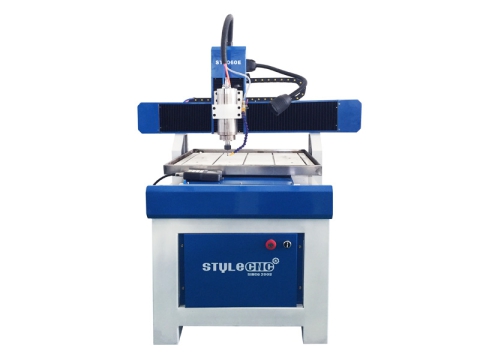
Prices here run from a few thousand dollars to well over forty, and that spread is not a discount, it is 3 different machines. A molino de escritorio is closest to an engraving machine with a strong frame: excellent on brass, copper, aluminum, and plastics, and happiest with shallow passes. A benchtop metal mill steps up in mass and handles small moulds, repairs, and steady soft-metal work. An industrial vertical machining center is a different animal again, built to cut steel all shift. Knowing which tier you are shopping in prevents the most expensive mistake in this category.
Rigidity Beats Horsepower
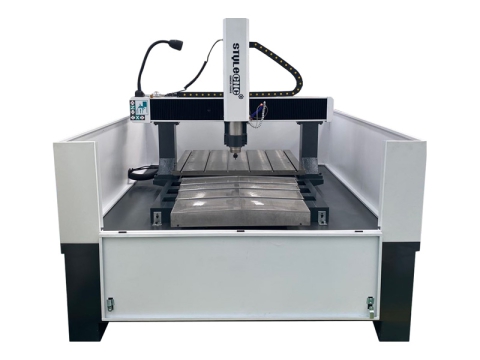
Spec sheets advertise spindle power and speed, but in metal the quieter number matters more: how much the machine flexes. Cutting forces push back hard, and a light frame answers by chattering, which spoils the finish, shortens cutter life, and costs accuracy. Mass, a boxed casting, wide ball screws, and solid linear rails are what absorb that push, which is why one reviewer here singles out the sturdiness of his machine against ordinary routers. When 2 mills look similar on paper, compare their w8 and frame construction before their spindle ratings. The heavier one will usually cut better, and a mold-making mill earns its price on exactly that basis.
Where a Small Mill Actually Earns
Mills are not mass-production tools, and the page says as much: long runs of simple parts are better served elsewhere. Their sweet spot is small quantities of awkward, valuable work. Reviewers here describe exactly that, one running a gunsmithing shop for repairs and custom builds, another starting with aluminum parts. Mould inserts, electrodes, dental and jewellery pieces, replacement components no longer sold, and prototypes ahead of production all suit a machine that can hold tolerance on one piece at a time. If that describes your work, an affordable home mill pays back faster than a bigger machine waiting for volume that never comes.
What each tier handles:
| Nivel | Comfortable With | Trabajo típico |
|---|
| Molino de escritorio | Brass, copper, aluminum, plastics | Engraving, badges, light parts |
| Benchtop metal mill | Soft metals, light steel passes | Small molds, repairs, prototypes |
| Industrial VMC | Steel and tool steel all day | Production parts and molds |
CNC mill buying checklist:
✅ Match the tier to the metal you cut most.
✅ Weigh the machine, not just its spindle rating.
✅ Order the tool changer with the machine if you want one.
✅ Start with aluminum before attempting steel.
✅ Learn one CAM package properly before buying upgrades.