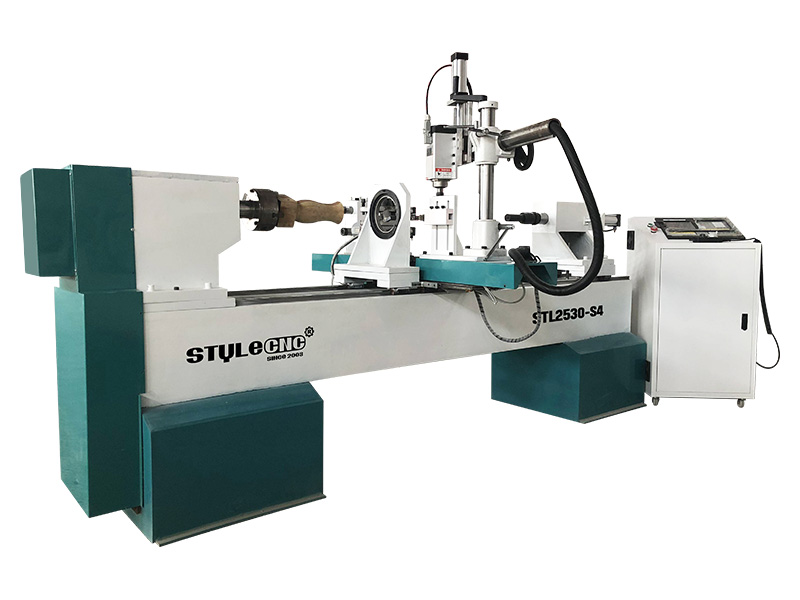
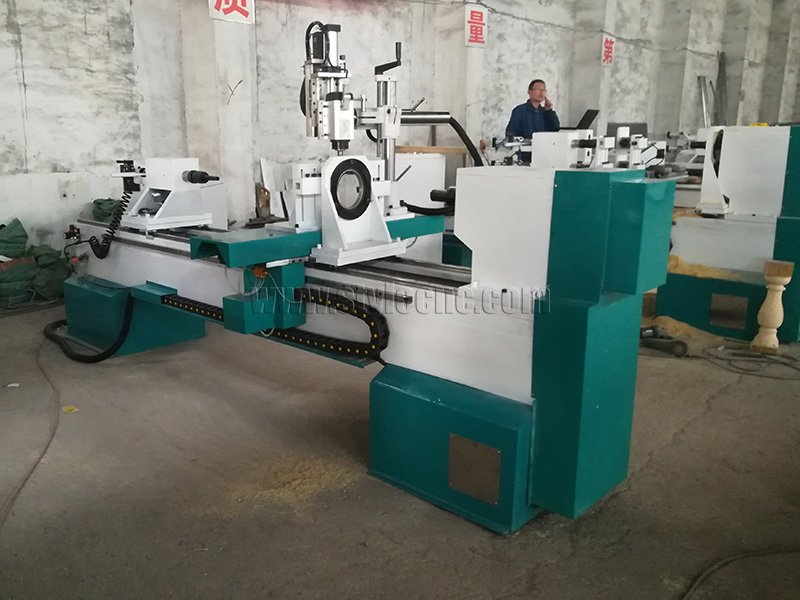
Es más grande de lo que podía imaginar, pero el torno en sí está bien construido, es sólido y duradero. Como versión mejorada de mi torno manual, el STL2530-S4 Puede realizar tanto torneado como fresado. Todo es automático con el controlador CNC, excepto el cambio de herramientas de torneado y la carga de piezas de madera. Los balaustres de mis escaleras y las patas de mis mesas se pueden decorar con hermosos patrones o relieves fresados por el husillo incorporado, que son agradables a la vista y ya no resultan aburridos. No puedo esperar a pasar a más proyectos de carpintería.
Torno CNC de 4 ejes para madera 3D Torneado, fresado, brochado
Última actualización: 2026-09-08 12:02:04
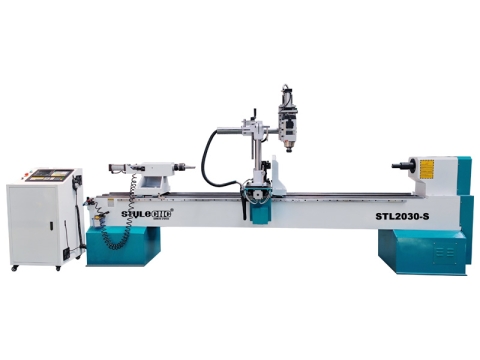
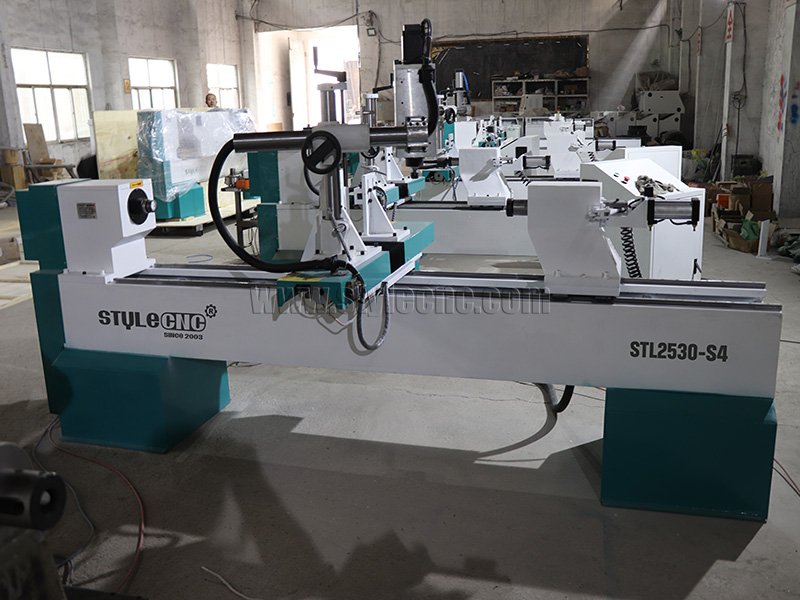
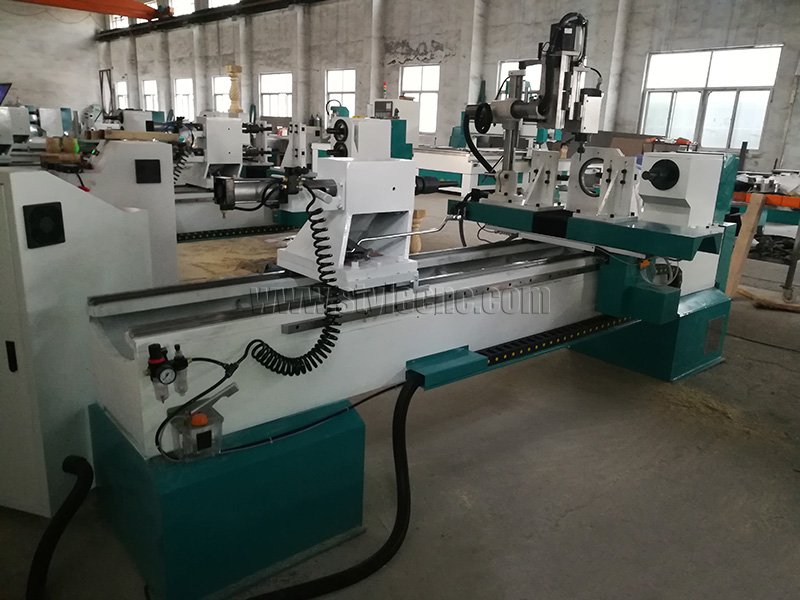
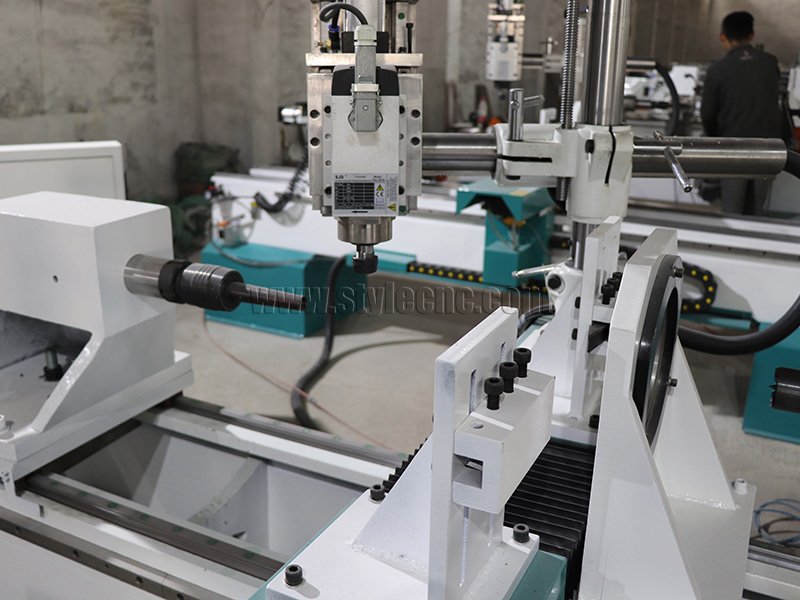
El torno de madera CNC de 4 ejes es un torno de madera de tamaño completo y de alta resistencia para 3D Torneado y brochado, tallado y corte con husillo fresador adicional.
- Marcas - STYLECNC
- Modelo - STL2530-S4
- Fabricante - Maquinaria De Estilo Jinan Co., Ltd.
- Categoría - Máquina de torno CNC para madera
$8,880 - $10,180 para las ediciones Básica y Pro
- 360 unidades en stock disponibles para la venta cada mes
- Cumple con las normas CE en términos de calidad y seguridad.
- Garantía limitada de un año para toda la máquina (garantías extendidas disponibles para las piezas principales)
- Garantía de devolución de dinero de 30 días para su compra
- Soporte técnico gratuito de por vida para usuarios finales y distribuidores.
- En línea (PayPal, Alibaba) / Fuera de línea (Transferencia bancaria, Tarjetas de débito y crédito)
- Logística global y envíos internacionales a cualquier lugar
Características del torno de madera CNC de 4 ejes
1. Bancada de torno de hierro fundido pesado para evitar vibraciones cuando el motor gira rápidamente para el proceso de piezas de trabajo de gran formato, y la velocidad de giro se puede ajustar a través del convertidor de frecuencia.
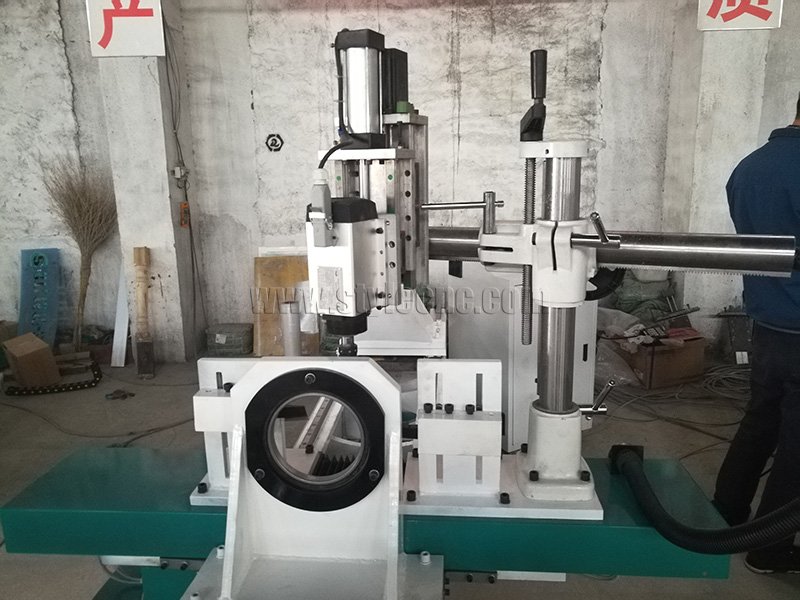
2. Torno de madera CNC de 4 ejes con un mandril y un juego para materiales fijos, un husillo para tallado.
3. La máquina de torneado de madera CNC de 4 ejes adopta la guía cuadrada Hiwin de Taiwán, alta precisión y durabilidad.
4. El software Autocad es más fácil para dibujar diseños.
5. El sistema de control LCD muestra el proceso de trabajo.
6. STL2530-S4 se puede personalizar como STL1530-S4 y STL2030-S4 para adaptarse a diferentes requisitos.
Aplicaciones del torno de madera CNC de 4 ejes
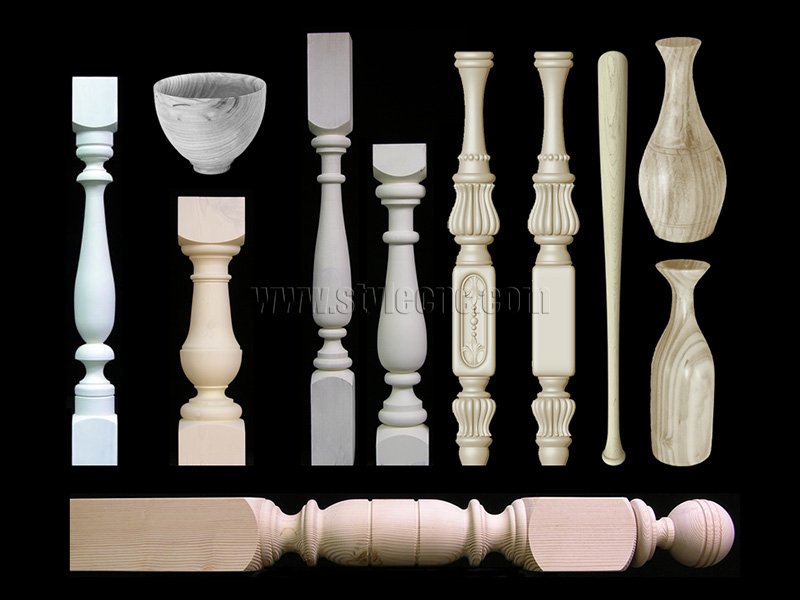
Columnas romanas, columnas tubulares afiladas, columnas afiladas, artesanías de madera para vehículos, balaustres de escaleras, columnas de escaleras, postes de escaleras, patas de mesas auxiliares, patas de mesas de comedor, patas de taburetes de bar, patas de mesas de sofá, columnas en general, lavabos, bates de béisbol, jarrones de madera, muebles de madera para automóviles, columnas de camas para niños, camillas para sillas, postes para brazos de sillas, barandillas de cama, postes de lámparas, pies de sofá, pies de bollo y otras piezas de trabajo cilíndricas.
Parámetros técnicos del torno de madera CNC de 4 ejes
| Modelo | STL2530-S4 |
| Longitud máxima de giro | 100mm-2500mm |
| Max diámetro de giro | 20mm-300mm |
| Huso | 3.5KW Husillo de refrigeración por aire con motor |
| Numero de eje | Un solo eje, cuchillas dobles |
| Velocidad de alimentación máxima | 200cm / min |
| Eje de velocidad | 0-3000r / min |
| Unidad mínima de ajuste | 0.01 cm |
| Sistema de control | PLC |
| Sistema de conducción | Motor paso a paso |
| Fuente de alimentación | AC220V/60 hZ (CA 380 V como opción) |
| Consumo total de energía | 5.5kw |
| dimensiones máximas | 4280*1270*1550mm |
| Peso | 1800kgs |
Detalles del torno de madera CNC de 4 ejes
Proyectos de torneado, fresado y brochado con torno de madera CNC de 4 ejes
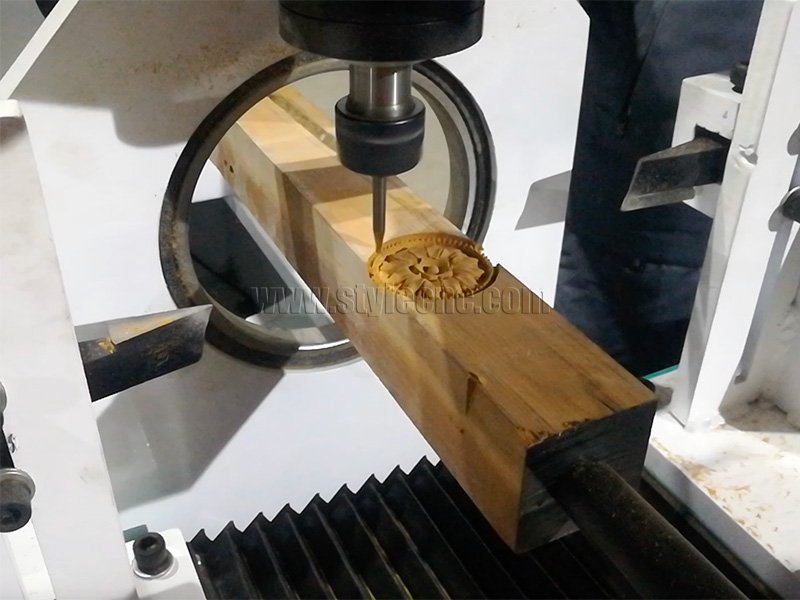
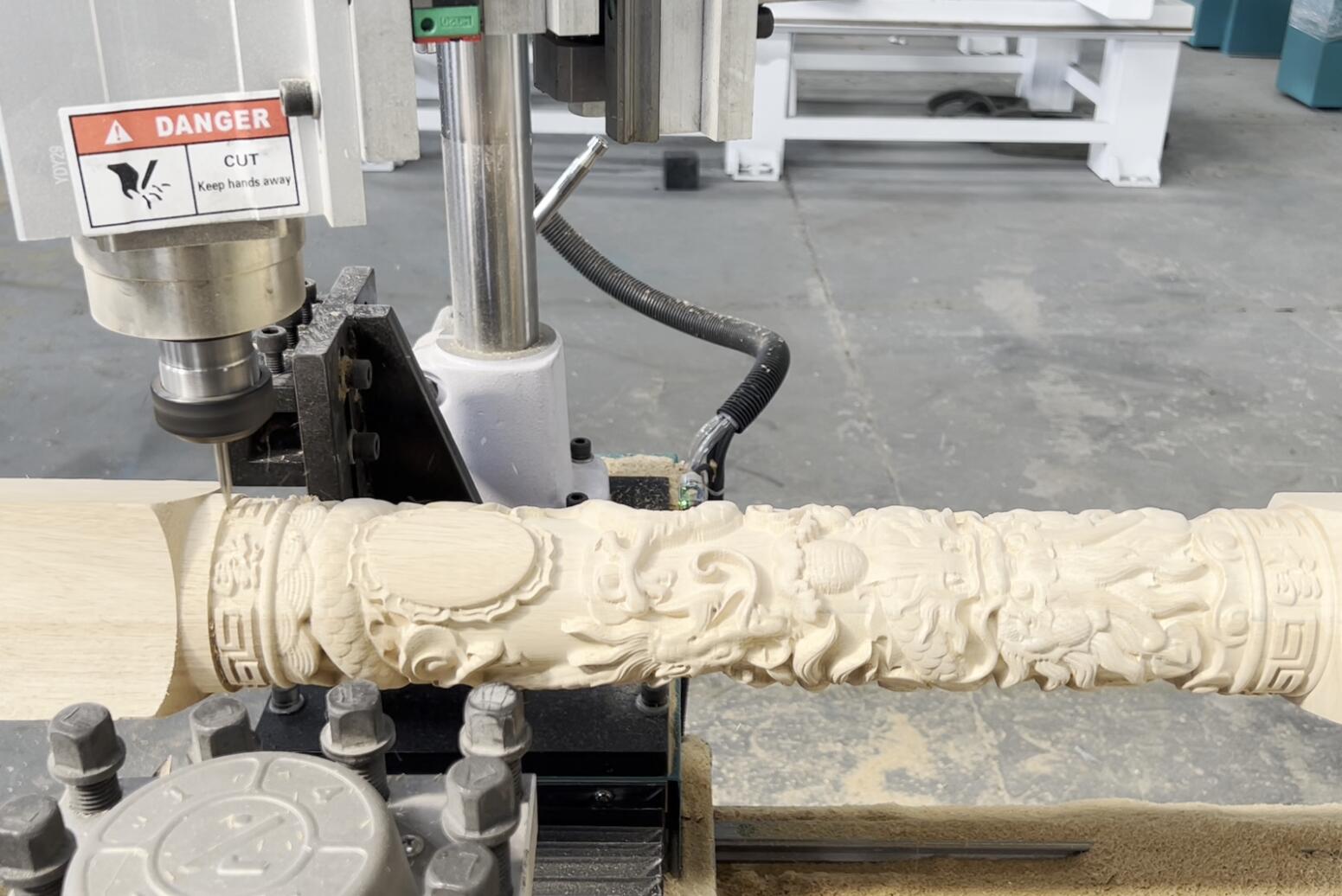
El mandril se convierte en un eje controlado.
En un torno convencional, el cabezal solo hace girar la madera, de forma rápida y libre, mientras una cuchilla le da forma. El cuarto eje modifica la función del mandril: el controlador ahora puede detener la pieza en un ángulo exacto, mantenerla en esa posición o hacerla girar lenta y precisamente mientras el husillo de tallado independiente realiza el corte. La rotación deja de ser un simple movimiento y se convierte en una coordenada que el programa puede controlar, del mismo modo que controla el desplazamiento a lo largo de la bancada. Ese es el secreto del torneado tallado. Dado que el mandril y el contrapunto mantienen su sujeción durante ambas operaciones, el patrón se coloca exactamente donde indica el dibujo con respecto al perfil torneado, sin necesidad de volver a sujetar la pieza ni de desviarse.
Primero gira, luego talla.
Una pata decorada es en realidad dos trabajos unidos en un solo ciclo. Las cuchillas dobles giran primero el perfil redondo, desbasando y acabando la forma. Luego, la máquina entrega la pieza al husillo de tallado de 3.5 kW, que fresa estrías, torsiones, relieves o ranuras en esa superficie acabada. Los propietarios describen exactamente esto en las reseñas: balaustres y patas de mesa que salen del torno ya decorados con patrones fresados en lugar de quedar como cilindros lisos. El valor reside en el registro. Como nada se suelta entre las dos etapas, las estrías permanecen espaciadas uniformemente alrededor de la pieza y centradas en el perfil, lo que es difícil y lento de lograr a mano o moviendo la pieza a un máquina de torneado independiente y luego una mesa de enrutamiento.
Planificar el tiempo y las herramientas para el tallado.
El precio justo por esa capacidad es el tiempo. El torneado elimina la madera en amplios movimientos y termina una pata en minutos; el tallado la elimina poco a poco, con una broca estrecha, por lo que un patrón ornamentado puede llevar más tiempo que el torneado anterior. La profundidad y el detalle determinan ese tiempo, y una broca más pequeña para trabajos más finos significa más pasadas. Planifique los precios en función de las piezas decoradas en lugar de las sencillas, y mantenga la decoración proporcional a lo que los clientes realmente pagan. Los diseños provienen de AutoCAD o similar. Software CAD / CAM, de modo que el patrón se dibuja una vez y se repite indefinidamente.
Lo que puede cortar el husillo de tallado:
| Decoración | Cómo se mueven los ejes | Uso típico |
|---|---|---|
| Flautas | Índice, corte a lo largo, índice de nuevo | Columnas, patas de mesa |
| Torsiones de cuerda | Rotar y viajar juntos | postes de cama, balaustres |
| Patrones en relieve | Girar continuamente mientras se talla | Columnas decorativas, artesanías |
| Ranuras y brochado | Quédate quieto, sumérgete y muévete. | Carpintería, mortajas, chaveteros |
Lista de verificación para torneado tallado:
✓ Primero gira el perfil y luego talla el detalle.
✓ Mantenga la pieza en blanco sujeta entre ambas operaciones.
✓ Ajusta el tamaño del bit al detalle más fino del archivo.
✓ Presupuestar el tiempo de tallado por separado del tiempo de torneado.
✓ Pide la talla que mejor se adapte a tu trabajo más largo.
Preguntas frecuentes
¿Es esto lo mismo que un router de 4 ejes?
La idea es la misma: un eje giratorio más un husillo de corte, pero la construcción es diferente. Se trata de un torno completo, con cuchillas de torneado dobles y una bancada de hierro fundido macizo para piezas largas. El husillo de tallado se añade para decorar la pieza que se mecaniza.
¿Todavía tengo que cambiar las herramientas de torneado a mano?
Sí, en este modelo, como señala un crítico: la carga de las piezas en bruto y el cambio de herramientas de torneado siguen siendo manuales, mientras que todo lo demás funciona automáticamente. versión ATC Añade un cambiador automático de herramientas si eso se convierte en un cuello de botella.
¿Qué longitud puede tener la pieza de trabajo?
Esta construcción pasa de 100mm hasta 2500mm largo y 20mm a 300mm de diámetro. La misma máquina se ofrece en versiones más cortas, para que pueda pedir la longitud de mesa que se ajuste a su producto más largo en lugar de pagar por un alcance que nunca utiliza.
¿Necesita alimentación trifásica?
No necesariamente. Se envía para monofásico. 220V Con la opción de 380 V, que consume aproximadamente 5.5 kW en total. Confirme su suministro eléctrico antes de realizar el pedido, ya que la elección se realiza en fábrica y no se puede modificar posteriormente.
¿Puede tallar un completo? 3D ¿Relieve, no solo flautas?
Sí. Debido a que el eje giratorio y el husillo de tallado se mueven juntos, la máquina puede envolver patrones de relieve continuos alrededor de una columna, razón por la cual la página lo llama así. 3D torneado en lugar de simple ranurado.
¿Qué causa que los detalles tallados sean toscos o irregulares?
Por lo general, se trata de una broca desafilada, una alimentación demasiado rápida para la profundidad o una pieza que no estaba completamente curada, ya que la madera húmeda se desgarra en lugar de cortarse. Guía para solucionar problemas del torno de madera cubre las causas comunes y una Comparativa de tornos te será útil si aún estás decidiendo.
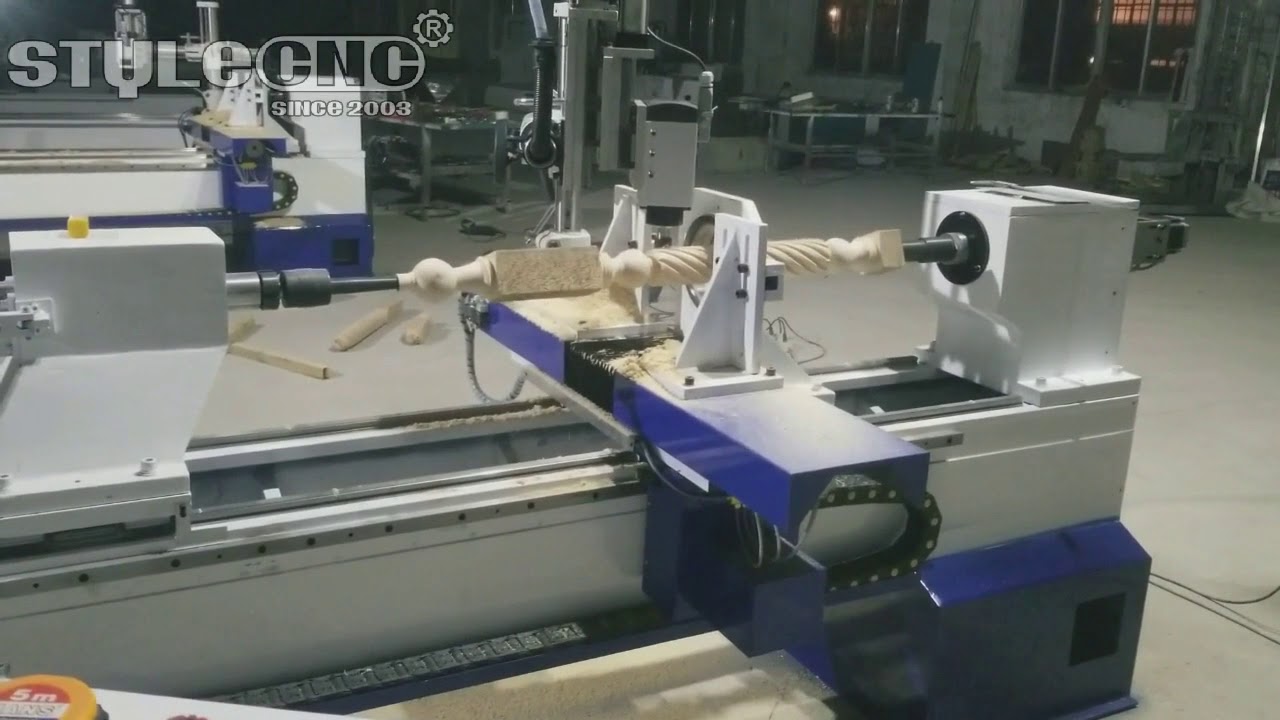
Los clientes dicen - No confíe en nuestras palabras. Descubra lo que dicen nuestros clientes sobre nuestros productos y servicios que han comprado, tenido o experimentado.
Lucas Kemp
Oliver
Me gusta el torno de 4 ejes para madera, como una máquina enrutadora CNC, puede hacer algunos tallados en relieve 3D, lo cual es adecuado para la producción de patas de mesa.
Historias relacionadas

Productos relacionados
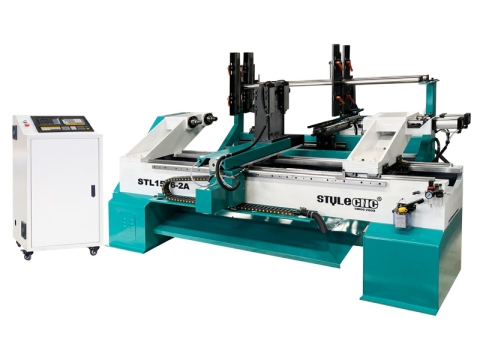
STL1516-2A
$7,680 - $8,180
Torno CNC de doble husillo para la fabricación de tacos de billar de madera
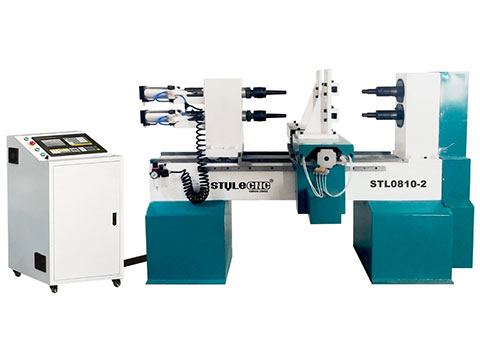
STL0810-2
$4,980 - $8,580
Pequeño torno de madera para principiantes: torno de madera CNC para uso doméstico